From Noble Heir to Ruthless Ruler: The Unconventional Rise of Miltiades
In the annals of ancient Greek history, few names resonate with the strategic brilliance and decisive action of Miltiades. Remembered primarily as the Athenian general who orchestrated the improbable victory over the vastly superior Persian forces at the Battle of Marathon in 490 BCE, Miltiades' journey to military legend was anything but conventional. Far from a straightforward path to heroism, his early life reveals a fascinating blend of aristocratic privilege, cunning political maneuvering, and a ruthless streak that would define his ascent to power. This is the story of how a noble heir transformed into a pragmatic, and at times brutal, ruler, laying the groundwork for the leader who would defy an empire.
The Legacy of the Philaidae: A Noble Upbringing
Born around 555 BCE, Miltiades inherited a name steeped in Athenian aristocracy. He was the son of Cimon of Athens, a celebrated figure renowned not just for his wealth but for his extraordinary success as an Olympic charioteer. The family belonged to the esteemed Philaid clan, one of Athens' wealthiest and most influential lineages. This birthright granted Miltiades access to the finest education and an upbringing meticulously geared towards success in the turbulent world of Athenian politics.
The Philaids were no strangers to power, and their extensive network of connections, both within Athens and across the wider Greek world, provided a formidable foundation for any ambitious scion. Miltiades grew up immersed in an environment where strategic thinking, oratorical skill, and a deep understanding of governance were paramount. This privileged background, however, belied the unconventional and often brutal methods he would later employ to secure his own dominion. He was being groomed for leadership, but the form his leadership would take was uniquely his own – a blend of inherited status and self-made authority forged in the crucible of realpolitik.
An Unexpected Inheritance: The Chersonese Challenge
Miltiades' true test, and the catalyst for his transformation, came in his twenties. The opportunity arose through a familial tragedy: the death of his elder brother, Stesagoras, who ruled a kingdom in the Thracian Chersonese. This prosperous territory, located north of the ancient site of Troy, had been a valuable asset to the Philaid family, providing wealth and influence far from the direct oversight of Athens. Stesagoras, however, died childless, leaving the kingdom without an heir.
This created a precarious situation. The people of Chersonese, having grown weary of Philaid rule, saw their king's death without direct succession as a golden opportunity. They harbored hopes of finally governing themselves, seizing a chance for autonomy after generations under Athenian aristocratic control. Their aspirations presented Miltiades with a critical juncture: he could either allow the kingdom to slip from Philaid grasp, or he could act decisively to secure his family's legacy. Unlike his predecessors, Miltiades possessed a keen understanding of power dynamics and a willingness to transcend traditional expectations. He arrived in the Chersonese knowing he would face considerable resistance, particularly from the local elders who would undoubtedly attempt to outmaneuver and manipulate him.
The Ruthless Gambit: Securing Power
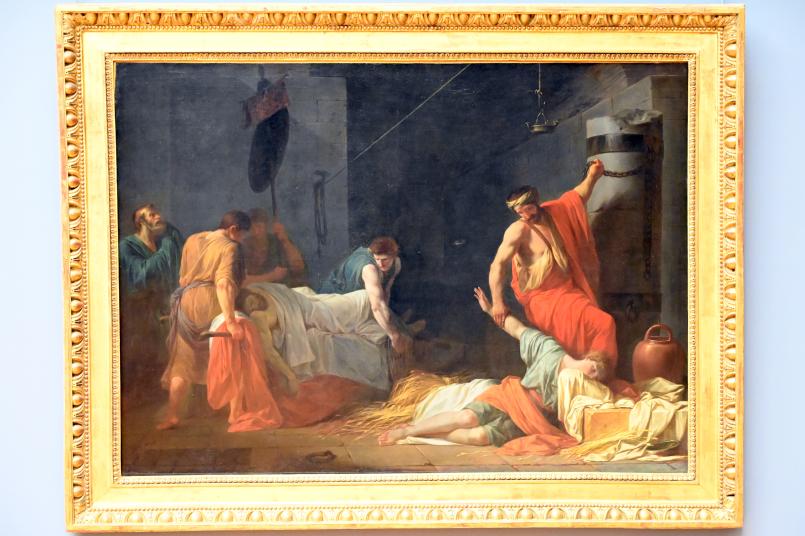
What followed Miltiades' arrival in Chersonese was a masterclass in strategic intimidation and swift consolidation of power. Far from engaging in lengthy negotiations or attempting to win over the populace through diplomacy, Miltiades adopted a startlingly direct approach. He retreated into his new palace, sealing all doors and windows, and feigned intense mourning for his deceased brother. This theatrical display served a dual purpose: it created an air of inaccessibility, preventing immediate challenges, and it set a trap.
As anticipated, the elders of Chersonese, eager to test the new ruler's mettle and express their "condolences" (likely a pretext for probing his weaknesses), arrived en masse at his residence. Miltiades, however, had no intention of allowing them to waste his time or undermine his authority. The moment they were gathered, his guards, acting on his command, arrested them all on charges of treason. The elders were promptly imprisoned, effectively decapitating the local opposition.
The Greek historian Herodotus, a contemporary chronicler, noted Miltiades' stark pragmatism: he saw what needed to be done and he did it. This audacious move eliminated any immediate threats to his rule and sent an unequivocal message to the rest of the populace: Miltiades was not to be trifled with. He swiftly took control, establishing his authority without further interference or harassment. This early display of ruthlessness foreshadowed the decisive and often unconventional thinking that would later characterize his military career, including his legendary strategy at Marathon. It demonstrated a leader who understood that power, once acquired, must be held firmly, even if it meant abandoning traditional courtesies.
Forging Alliances: The Pragmatic Ruler
With the internal opposition neutralized, Miltiades turned his attention to consolidating his position externally. He understood that raw power, while effective, also required strategic alliances to ensure long-term stability and deter future unrest. His next move was a shrewd political marriage. He took as his wife Hegesipyle, a Thracian princess and the daughter of Olorus, a powerful neighboring king.
This alliance was a masterstroke. By marrying into the Thracian royal family, Miltiades not only secured a vital regional partner but also strengthened his kingdom's borders against potential threats. Such dynastic unions were a common and effective tool in ancient diplomacy, cementing bonds and creating mutual interests between rulers. Hegesipyle would later bear him a son, Cimon, who would become a prominent Athenian statesman and general in his own right, further solidifying Miltiades' enduring legacy. The strategic thinking behind this marriage – combining political power with familial succession – showcases Miltiades' capacity for long-term planning, a trait that would prove invaluable on the battlefields of Greece.
The Blueprint for a Conqueror: From Chersonese to Marathon
The unconventional rise of Miltiades in the Chersonese provided a crucial proving ground for the general who would lead Athens to victory against the Persian Empire. His actions in securing his inherited kingdom revealed a leader with a profound understanding of strategy, a willingness to innovate, and an unwavering resolve to achieve his objectives, regardless of public opinion or traditional methods. The calculated ruthlessness he displayed in dealing with the Chersonese elders, coupled with his foresight in forging key alliances, laid a foundational blueprint for his later military brilliance.
These early experiences honed his ability to assess a situation rapidly, identify the critical leverage points, and execute a decisive plan. This was the same mind that, faced with overwhelming Persian numbers at Marathon, would eschew conventional Greek battle formations for a daring, unexpected maneuver that shattered the enemy lines. His courage to defy tradition, first in politics and then in warfare, became his signature. To learn more about this pivotal moment, explore
Miltiades' Marathon Masterclass: How One General Defied Persia.
The enduring legacy of Miltiades, the visionary general, continued through his line, most notably with his own distinguished progeny. Indeed, the influence of a great father often shapes the path of his offspring, a dynamic perhaps best encapsulated by his celebrated son, Cimon, who would also leave an indelible mark on Athenian history. Miltiades' story is not just one of military prowess but of a comprehensive political and strategic genius developed early in his career. His pivotal contributions to ancient Greece extended beyond that single battle; delve deeper into his broader impact with
Miltiades: Beyond Marathon – His Pivotal Role in Ancient Greece.
Conclusion
Miltiades' journey from a well-bred Athenian noble to the undisputed ruler of the Chersonese, and ultimately to the hero of Marathon, is a compelling narrative of ambition, pragmatism, and sheer force of will. His early actions in consolidating power, marked by a shrewd understanding of human nature and an undeniable ruthlessness, were not simply opportunistic; they were foundational. They forged the character of a leader who could make difficult decisions under pressure, challenge established norms, and ultimately secure the survival and prosperity of his people. Miltiades' unconventional rise demonstrates that true leadership often requires a blend of inherited advantage, acquired wisdom, and the courage to act decisively, even if it means stepping outside the bounds of convention.