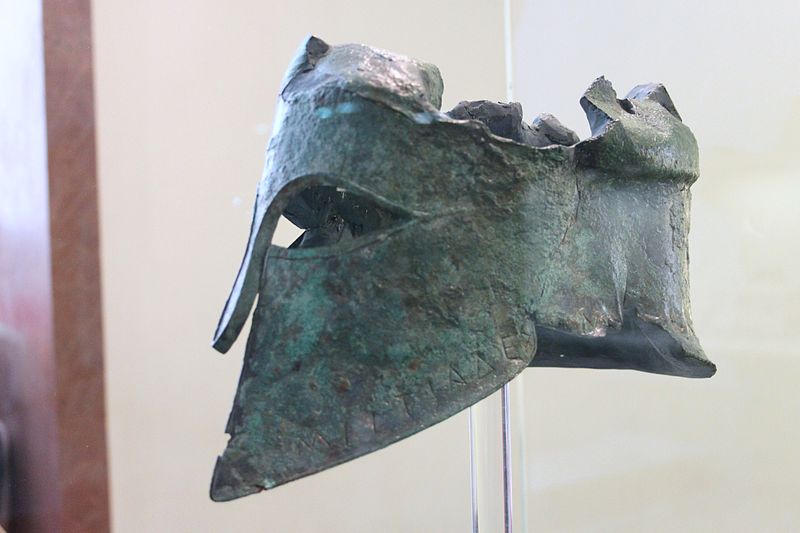
Miltiades' Marathon Masterclass: How One General Defied Persia
The year 490 BCE etched itself into the annals of history, a testament to courage, innovation, and an unwavering spirit against seemingly insurmountable odds. At the heart of this pivotal moment stood Miltiades, an Athenian general whose strategic brilliance at the Battle of Marathon not only saved Greece from Persian subjugation but also solidified his place as one of antiquity's most formidable military minds. Miltiades, a figure so central to ancient Greek history, is often discussed not just by name but also through his lineage, giving rise to terms like *Sohn Des Miltiades* ('Son of Miltiades' in German). While he was famously the son of Cimon of Athens, this very term can also encompass his own enduring legacy, particularly through his notable son, Cimon the Younger. But before we explore the long shadow he cast, let's delve into the man himself and the masterclass he delivered on the plains of Marathon.
The Crucible of Marathon: A Strategic Genius Unveiled
The backdrop to the Battle of Marathon was grim for the Greeks. King Darius I of Persia, fueled by a desire for vengeance against Athens and Eretria for their support of the Ionian Revolt, dispatched a massive expeditionary force under the command of Admiral Datis. This formidable Persian army, vastly superior in numbers, landed on the plain of Marathon, threatening the very existence of Athenian democracy. For the defending Greeks, led primarily by the Athenians and a contingent from Plataea, the situation was dire. Traditional Greek warfare relied on the phalanx, a dense formation of hoplites, effective in head-on clashes but vulnerable to flanking maneuvers and overwhelming numbers. Against the diverse and numerous Persian forces, which included archers and cavalry, a conventional approach seemed suicidal.
It was Miltiades who recognized the futility of conventional tactics. His keen understanding of terrain, enemy strengths, and his own limited resources led him to devise a truly revolutionary strategy. Instead of stretching his line to match the Persians, which would have dangerously thinned his forces, Miltiades chose to strengthen his flanks while deliberately weakening his center. This counter-intuitive maneuver was a stroke of genius. As the Greek phalanx advanced, the stronger Persian center pushed through Miltiades' weakened middle, drawing them deeper into the trap. Simultaneously, the reinforced Greek flanks enveloped the Persian wings, turning a frontal assault into a double envelopment. The Persians, disoriented and caught in a crushing vise, broke formation and fled in disarray towards their ships.
The battle was a resounding victory for the Greeks, with minimal casualties compared to the thousands of Persians who perished. Miltiades' audacious tactics not only secured an improbable triumph but also sent a powerful message: Persia was not invincible. This strategic masterclass at Marathon cemented Miltiades' reputation as an innovative military leader and saved Greece from immediate Persian dominance, buying crucial time for future defenses. His ability to think outside the box, adapt to new circumstances, and exploit perceived weaknesses remains a timeless lesson in leadership and strategic planning.
From Noble Birth to Ruthless Acumen: The Making of a General
Miltiades' journey to Marathon was not one of humble origins but rather of aristocratic privilege and political ambition. He was the son of Cimon of Athens, a celebrated aristocratic charioteer renowned for his triumphs at the Olympic Games. As a prominent member of the wealthy and highly respected Philaidae clan, Miltiades received the finest education, groomed from an early age for success in Athenian politics and public life. This pedigree meant that Miltiades, as the son of such an esteemed family, inherited a certain stature, a heritage reflected in terms of like *Sohn Des Miltiades* referring to his deep roots in Athenian society.
His early career took an unexpected turn in his twenties when, upon the childless death of his brother Stesagoras, Miltiades inherited a kingdom in the Chersonese (modern-day Gallipoli peninsula), located north of the ancient city of Troy in Asia Minor. This distant possession had proven to be a highly prosperous venture for the Philaidae family, but its people were weary of their rule. They harbored hopes of self-governance after their king's demise, an aspiration Miltiades was determined to crush.
Unlike his uncle or brother before him, who might have tried to appease or negotiate, Miltiades possessed a starkly pragmatic and ruthless understanding of power. He saw precisely what needed to be done to secure his rule and acted decisively. His unconventional rise to power in the Chersonese foreshadowed the boldness he would later display on the battlefield. For a deeper dive into this fascinating period of his life, explore
From Noble Heir to Ruthless Ruler: The Unconventional Rise of Miltiades.
Consolidating Power: A Masterclass in Political Survival
Upon his arrival in the Chersonese, Miltiades knew he faced immediate challenges from a populace eager for independence. Anticipating troublesome visits and manipulative attempts from the community's elders, he devised a cunning plan. He retreated into his new palace, closing all doors and shutters, feigning deep mourning for his deceased brother. This allowed him to gauge the local power dynamics and prepare for his decisive move.
When the elders of Chersonese, seeking to offer condolences and, perhaps, test the new ruler, arrived at his home in a group, Miltiades sprung his trap. Instead of granting them an audience, he had his guards arrest them on charges of treason. The elders were promptly imprisoned, effectively decapitating any organized opposition. From that moment on, Miltiades ruled his new kingdom without further interference or harassment. The Greek historian Herodotus noted that Miltiades, unlike his predecessors, *saw what needed to be done and did it*, securing his dominion rapidly.
To further solidify his position and ensure future stability, Miltiades skillfully employed diplomacy alongside his ruthlessness. He entered into a strategic marriage with Hegesipyle, a Thracian princess and the daughter of the neighboring King Olorus. This alliance forged a crucial bond, protecting his kingdom from external threats and internal unrest. Miltiades' actions in the Chersonese serve as a stark lesson in realpolitik: power, once seized, must be decisively consolidated and strategically defended. It demonstrates a leader's willingness to make unpopular but effective decisions for long-term stability.
The Legacy Beyond the Battlefield
Miltiades' victory at Marathon remains his most celebrated achievement, a testament to his tactical brilliance that resonated through centuries. His innovation not only saved Athens in 490 BCE but also profoundly influenced military strategy for generations. He proved that strategic thinking and bold leadership could overcome vast numerical disadvantages, a lesson that inspired future commanders and solidified the confidence of the fledgling Athenian democracy.
Beyond Marathon, Miltiades played a pivotal role in shaping ancient Greece's destiny, often navigating the complex political landscape with the same acumen he showed on the battlefield. His strategic mind continued to be sought after, and his reputation for decisive action preceded him. While his own life concluded with political challenges and an untimely death, his legacy endured. It was carried forward, not least, by his famous son, Cimon the Younger, who would become a prominent Athenian statesman and general, continuing the family's tradition of leadership and military prowess. Thus, the idea of *Sohn Des Miltiades* took on literal meaning, with his own son making significant contributions to Athens. For more on Miltiades' broader influence, see
Miltiades: Beyond Marathon – His Pivotal Role in Ancient Greece.
Conclusion
Miltiades' Marathon Masterclass was more than just a military victory; it was a defining moment in Western history. It showcased a leader willing to break from tradition, to innovate under pressure, and to act decisively both on the battlefield and in securing his political power. From his aristocratic beginnings as the son of Cimon of Athens to his ruthless consolidation of the Chersonese and ultimately, his strategic genius at Marathon, Miltiades embodied the complex, often contradictory, qualities of ancient leadership. His ability to assess, adapt, and execute under extreme pressure remains a compelling example for anyone seeking to understand the intersection of strategy, power, and enduring legacy. His story is a powerful reminder that true leadership often lies in the courage to defy expectations and forge one's own path to victory.